Wednesday, September 19, 2012

Why Romney Is 'Severely Conservative' After All


(Reprinted from National Journal)
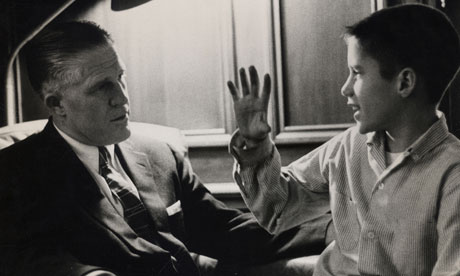
Mitt Romney is, once again, playing a dangerous game, not unlike what his father, George, engaged in 45 years ago after the latter’s notorious admission that he’d suffered a “brainwashing” about Vietnam. Like the father, the son is standing by the substance of his words, even when they invite howls of hostility. As Theodore H. White recorded in The Making of the President 1968, George Romney would have been wise to merely acknowledge a misstatement when he made a “toss-away” remark about Vietnam and let the matter drop, but “his pride was involved and he felt he was being abused.” So George Romney kept jumping to answer charges of incompetence and naivete until, in the end, he destroyed his candidacy, “leaving behind the impression of an honest and decent man simply not cut out to be president,” White wrote. “Romney could not win with the press.” 
Mitt Romney isn’t winning either, with his conservative allies in the media who have been lambasting him lately as much as the liberals. But there does seem to be a pattern emerging here: Romney just doesn’t back down, even when perhaps he should for political reasons, apparently because he actually, and proudly, believes in what he said. Something similar occurred last week, when Romney stood by remarks accusing the Obama administration of  “apologizing” for American values long after it became clear that he had spoken too soon about what happened in Libya.
All of which is helping to fill in the still-substantial blanks about one of the central questions hanging over this campaign: Who is Mitt Romney really? For years, his conservatism has been questioned. During the GOP primaries in February, after Romney protested to CPAC that he was “severely conservative,” Rush Limbaugh labeled the line a “pander.” "I have never heard anybody say, 'I'm severely conservative,' " Limbaugh shouted on his show. As recently as Tuesday, Rich Lowry of theNational Review also cast Romney as a parrot, writing dismissively of the GOP nominee’s recent comment at a fundraiser that 47 percent of the country didn't pay income tax and wanted government handouts: “The overall impression of Romney at this event is of someone who overheard some conservative cocktail chatter and maybe read a conservative blog or two, and is thoughtlessly repeating back what he heard and read.”
Umm, can we cut the guy some slack already? He’s not an idiot, and he’s certainly no parrot. Romney holds two graduate degrees from Harvard; he was a brilliant businessman who made Bain Capital into a $65 billion giant, turned around the Olympics, and hired the best tax accountants in town. Perhaps Romney really is just as “severely conservative” as he’s been telling us. If Mitt is as much of a fumble-mouth as his dad was, he’s no less sincere.
Maybe Romney really does believe that huge portions of the American public are irresponsible dependents or freeloaders. Maybe his choice of Paul Ryan for veep was not political opportunism or another cave to the conservative base, but the act of a true believer who buys fully into the tea party/Ayn Randian view—now dominant in the GOP—that government entitlements are out of control. And maybe the middle-of-the-road pragmatism that Romney occasionally showed as governor of Massachusetts was the aberration—forced on him by politics in that bluest of states, and from which he ran as soon as he could—and not the real Romney at all.
Hence, in his interview on Fox on Tuesday, rather than repudiating a series of comments that even fellow Republicans are urging him to renounce, Romney sought to justify and reaffirm the main thrust of them. "Those who are dependent on government and those who believe in redistribution, they're not going to vote for me," he said again. Romney thus appeared to effectively eliminate most of America—even the many businessmen who get tax breaks and government grants—from his voter base.
We may now be watching one of the most conservative presidential candidates since Barry Goldwater in action, rather than the pseudo-conservative we thought we were getting. Perhaps what was most striking about Romney’s remarks at that Florida fundraiser was the total absence of what George W. Bush once touted (successfully, at the time) as “compassionate conservatism,” and his obvious disdain for anyone with need of government help of any kind as someone devoid of “personal responsibility.” Indeed, one could draw a straight line from those off-the-cuff comments to Romney’s uninspiring (and apparently personally rewritten) acceptance speech in Tampa, when he tossed off a few lines about lifting up all Americans, but none seemed very deeply felt. Even Ryan, the youthful erstwhile Rand devotee of the slash-the-safety-net budget, got off a more memorable line in his own acceptance speech about how "the truest measure of any society is how it treats those who cannot defend or care for themselves.”
Mitt Romney, like his father, may not have a winning strategy here, not when his views are so “small and pinched and narrow,” as Peggy Noonan has put it. But we're certainly getting to know him better.

Monday, September 17, 2012

What Romney's Missing on the Mideast


Say this for Mitt Romney, he stands his ground, just as his father George did two generations before. Even after the tragic death of Ambassador to Libya Chris Stevens and three other Americans, and with anti-U.S. violence in the Mideast continuing to threaten American lives, Romney ratcheted up his criticism of President Obama’s supposedly weak policies. “Apology for America’s values is never the right course,” Romney declared at news conference Wednesday morning. 
But what if America’s values are themselves part of the problem? The unavoidable if unpleasant truth is that the advent of democracy in the region has presented Washington with a giant headache. The new democratic movements have mainly empowered Islamist parties and groups in Egypt, Libya, Tunisia and Yemen. So the administration has little choice but to engage these groups, but because they tend to be anti-American (and anti-Israel), Obama must do so warily, often with what the Republican nominee thunderingly criticizes as “mixed signals.”
And as any expert in the region will tell you, it’s not just Obama who will be stuck with this problem. Every American president will now have to walk a very careful line between supporting democracy in the Arab world and showing caution about whose hands it falls into, while at the same time keeping Arab military leaders from destroying these infant democracies. In Egypt, for example, Washington was not eager to endorse an interim constitution previously imposed by the generals of the Supreme Council of the Armed Forces, which tried to weaken the presidency, but neither is it going to want to back a prospective sharia-based constitution sought by the new Muslim Brotherhood president, Mohamed Morsi. Hence it’s no surprise that the president fudged this week on whether to call Egypt an “ally.”
Romney insists he is speaking out only in an effort to correct Obama’s “disgraceful” mistakes in the region, including his failure to confront Iran more forcefully over its nuclear weapons program. And if the GOP candidate’s analysis is correct, Obama will likely face only more out-of-control chaos that could reflect badly on him come Nov. 6.
But if Romney is wrong—and even some of his fellow Republicans have questioned the tenor and timing of his remarks—then he may end up looking as naïve as his father, George Romney, did back in 1967 when he admitted to getting a “brainwashing” on Vietnam, thus undoing his own presidential bid. And Romney’s problem is that it wouldn’t be the first time he looked like an innocent abroad.  During his trip overseas in July, Romney also drew criticism for what was deemed an out-of-touch comment. In a speech in Jerusalem, he said that "culture makes all the difference" in explaining the "stark difference in economic vitality" between Israelis and Palestinians, although even Israelis will concede that the occupation is a key reason for Palestinian economic backwardness. 
This time too, many Mideast experts tend to back Obama and to label Romney as out of his depth (along with some Republican critics as well). “As with most of his foreign policy, there's no real sign of any deep thought here,” says Marc Lynch, the author of The Arab Uprising: The Unfinished Revolutions of the New Middle East. “The main ideas he does have -- that the region is calling out for American leadership, that bold rhetoric would change everything, that Obama has been weak or naïve -- are clearly wrong.” Nathan Brown, a Mideast scholar at The George Washington University, says “the Obama administration’s approach is actually extremely sound because it is based on a realization of what you can and can’t do. They’re dealing with the reality on the ground as opposed to the Middle East it would prefer to exist, which is what happened [with the Bush administration] a decade ago in Iraq.”
The president, adopting the faint mocking tone he has typically directed at Romney’s inexperience in foreign policy, told CBS’s 60 Minutes this week: “Gov. Romney seems to have a tendency to shoot first and aim later." He added cuttingly: "As president, one of the things I've learned is you can't do that … It's important for you to make sure that the statements that you make are backed up by the facts and that you've thought through the ramifications before you make them."
Since he delivered a now-famous speech in Cairo in 2009 seeking “a new beginning between the United States and Muslims around the world”—a speech Republicans say was part of an “apology tour” -- Obama’s approach to the Arab world has combined tentativeness and toughness. The administration wavered in response on the Arab spring at first, tentatively defending Hosni Mubarak, and only reluctantly backed the NATO intervention in Libya. But Obama has also done much to discredit and seriously damage al-Qaida and other extremist elements.
By the time the Arab Spring was in full flower, Obama was well into a savagely successful military and drone program that took out Osama bin Laden and much of his top leadership, thus decimating the worst of the violent jihadists. At the same time Obama withdrew from Iraq, robbing al-Qaida of bin Laden’s old “far enemy,” the United States. Thus the Iraq withdrawal, the marginalization of al-Qaida, and the overturning of Mubarak, Moammar Qaddafi in Libya and other dictators together created a new atmosphere, opening up new channels of expression and supplying for the first time in decades an alternative to violent jihad. Experts point to fractionalizing of the Brotherhood and Salafist groups, which are being forced to govern pragmatically in the jostle for influence and power in their home countries.
Despite the horror of Stevens’ death under assault from a group of protesters and possibly militants, in truth more Islamists have been working with the U.S. than against it, including Egyptian President Morsi.  In response to the attacks on U.S. buildings, the Islamist government of Egypt is walking its own fine line. “What you have right now is a Muslim Brotherhood president that has a decent government to government relationship with the U.S.,” says Brown. Thus, Morsi has called for prosecution of the makers of an anti-Muslim video that helped to trigger the violence this week—but nothing worse. “What they’re trying to do is express outrage but make sure it doesn’t interfere with anything” such as aid or Morsi’s tacit support for the Egypt-Israel treaty, Brown adds. “The Brotherhood calls for [anti U.S.] protests, but it’s clear they will be centered around mosques, but not on the U.S. embassy.”
White House spokesman Tommy Vietor told National Journal Thursday it was important to “disaggregate” the administration’s general policies from the violent protests this week. “Nothing the administration has done has led to the protests in Cairo recently or the incidents in Benghazi or Sana’a [Yemen]. Those are sort of outside events based on a little-known film used to incite people,” he said. But in fact polls show high approval ratings for the U.S. in Libya and even Morsi has moved to protect U.S. buildings and personnel in recent days.
Even prominent neoconservatives such as Bill Kristol and Charles Krauthammer have outraged their former allies on the right by saying the U.S. has no choice but to engage the new Islamist political parties formed by the Muslim Brotherhood (which formally renounced violence decades ago) and other former jihadist groups. Another prominent figure on the right, Reuel Marc Gerecht, a former CIA official who is deemed one of the most astute analysts of jihadism,  wrote  in The Wall Street Journal recently that it is unavoidable that “Islamists who braved the wrath of rulers and trenchantly critiqued the moral breakdown of their societies were going to do well in a post secular age. What is poorly understood in the West is how critical fundamentalists are to the moral and political rejuvenation of their countries. As counter intuitive as it seems, they are the key to more democratic, liberal politics in the region.”
America, in other words, may simply have to endure an unpleasant Islamist middle stage—and Arabs may have to experience the failure of extremism in government, as the Iranians have—before the Arab world finally enters the modern world.
It’s not just Arab politics that have proved more complex than the campaign rhetoric often makes out. When it comes to Iran as well, Romney has criticized Obama for weakness in trying to negotiate. But in fact Obama dropped his “outstretched hand” approach to Tehran in 2010, and since then has applied tougher sanctions and underwritten covert action.
Is Romney out of line? It’s clear that the ugly temper of U.S. presidential politics has long since moved on from the days when Arthur Vandenberg, the Republican senator who reluctantly embraced the Truman Doctrine and Marshall Plan, declared that “politics stops at the water’s edge.” American politics today is borderless. And so—depending on whom American voters believe on the Mideast, Obama or Romney – it’s entirely possible that the violence raging far away could affect this year’s presidential election far more than anyone imagined.

Wednesday, September 12, 2012

Mitt and George: Two Innocents Abroad


Rereading Teddy White’s “The Making of the President—1968” about George Romney’s downfall I came across this line: “No one wanted an innocent for President.” Now his son too is coming across with disconcerting regularity—his comments in July denigrating Palestinian culture, now the absurd attack on Obama over Libya – as a naïf abroad, and a somewhat nasty one.

Setting aside the crassness and stupidity of Romney’s remarks, his substance is way off as well. As any expert in the region will tell you, every American president now has to walk a very careful line between supporting democracy in the Arab world and showing caution about whose hands it falls into. Right now in all these countries, Egypt, Syria and Libya, the strongest anti-regime advocates are either Islamist or military, and no one especially wants either side, military or Muslim, to dominate. Just consider the constitutional stalemate in Egypt for starters.

Mitt and George: two incredibly presidential-looking guys who may not have been cut out to be president. It seems that more and more, foreign policy could make the difference in this election. Be interesting to see the polling after this incident.  

Tuesday, September 11, 2012

Remembering a Decade of Disaster


This article appeared in the Saturday, September 3, 2011 edition of National Journal.
On Sept. 10, 2001, the United States of America stood at the pinnacle of its power and prestige. Even Rome, in its heyday, did not have the economic and military dominance over rival nations that America possessed. “Nothing has ever existed like this disparity of power,” Paul Kennedy, the historian from Yale (who a decade before had predicted a declining United States) wrote around that time. “The Pax Britannica was run on the cheap. Britain’s army was much smaller than European armies, and even the Royal Navy was equal only to the next two navies—right now all the other navies in the world combined could not dent American maritime supremacy. Charlemagne’s empire was merely western European in its reach. The Roman Empire stretched farther afield, but there was another great empire in Persia, and a larger one in China. There is, therefore, no comparison.”
The United States had a booming economy worth $10 trillion, a budget surplus, some of the strongest capital spending in decades, low unemployment, and little inflation. Its military machine could rain death on anyone from unreachable heights. B-2  pilots could take off from Missouri, bomb Belgrade, and be home for dinner.
If anything, America had grown only more dominant since the end of the Cold War, and perhaps for the first time in its history the nation faced no existential threat. The collapse of the Soviet Union in late December 1991 introduced a promising era of “unipolarity,” and it was soon clear that U.S. power had no rival—even on the horizon. Japan, which only a few years before had been seen as the up-and-coming superpower, fell into deep recession as its “bubble economy” collapsed. Post-Soviet Russia imploded into an economy smaller than Portugal’s. China lumbered forward, a nation in transition, but it remained a developing country with its future as a putative superpower still far off.
Today, things feel almost inverted. The events of Sept. 11 have ultimately left us, 10 years later, with an economy and a strategic stature that no longer seem terribly awesome. America is still the sole superpower, but our invincible military is bogged down in two wasting wars, and poorly armed insurgents seem not to fear us. The rest of the world, beginning with China and Japan, now underwrites our vast indebtedness with barely concealed impatience. We are a nation downgraded by Wall Street, disrespected abroad, and defied even now by al-Qaida, whose leader was killed only recently after spending most of the decade taunting Washington. How did this happen?
Scholars and pundits have offered up a number of explanations in recent years for what they like to call “American decline”: historical inevitability; the rise of the rest. But the most persuasive answer is, in a word, incompetence. The failure of leadership in Washington is so profound that it must rank not only with the worst failures of American presidents, but also with the worst failures of great-power leaders at any time in history—the kind that can turn great powers into lesser ones. “A phenomenon noticeable throughout history regardless of place or period is the pursuit by governments of policies contrary to their own interests,” historian Barbara Tuchman wrote in her 1984 book, The March of Folly, which presented case studies of some of these episodes: Montezuma’s unilateral surrender of his Aztec empire to the Spanish; George III’s bungled handling of the American colonies; the foolish overreaching of America in Vietnam. “We all know, from unending repetitions of Lord Acton’s dictum, that power corrupts,” Tuchman continued. “We are less aware that it breeds folly; that the power to command frequently causes failure to think.”
It is hard to escape the conclusion that al-Qaida outthought America—at least in provoking Washington to make the wrong strategic choices at the outset of the decade. That meant, in particular, all but abandoning the narrower fight in Afghanistan, al-Qaida’s true home, for an unrelated and much larger war in Iraq that we started under false pretenses—which is probably the only way a small, fractious group could elude a superpower for so long. If al-Qaida’s rhetoric is to be believed, one of its main goals was to “bleed” and “bankrupt” America—Osama bin Laden’s own words—through a long and draining conflict, as the fighters did to the Soviets in Afghanistan in the 1980s. “The jihadis expected the United States, like the Soviet Union, to be a clumsy opponent,” Wall StreetJournal reporter Alan Cullison wrote in The Atlantic in September 2004, quoting a remarkable series of letters he found by accident on an old computer left behind by al-Qaida’s then-second-in-command, Ayman Zawahiri, in Afghanistan.
The jihadis were right. America failed, strategically and economically. It failed to anticipate the enormous cost of going into Iraq and of losing focus in Afghanistan. It failed to find a way to pay for the wars that it launched. It failed with its feckless disregard for how all that debt was being amassed in the financial system to pay for war and other expensive government programs, such as the new Medicare prescription-drug benefit. And finally, after all the other reasons for going to war in Iraq had fallen apart—weapons of mass destruction, links between Saddam Hussein and al-Qaida—the final rationale, establishing democracy in Iraq as a model for the Arab world, has proved largely irrelevant as well: The Arab Spring occurred spontaneously, with no known link to events in Iraq.
It has been, in sum, a decade of disaster. The only remaining question now is: How much permanent damage has it done to the United States and its standing in the world?

FIRST BLOOD

There is plenty of blame to go around. Whatever mistakes Barack Obama has made in the last two and a half years, most of the responsibility rests with the chief steward of the post-9/11 decade, George W. Bush. It is no surprise that a survey of more than 230 U.S. historians and political scientists by Siena Research Institute in New York, conducted toward the beginning of every presidency since 1982, now rates the younger Bush as close to the worst president in American history on both foreign policy and the economy. Bush came in at 42nd out of 43 presidents for his handling of foreign policy, just ahead of the dead-last Lyndon Johnson, the main culprit in the Vietnam debacle. He ranked 42nd on the economy, just ahead of Herbert Hoover, who is often blamed for the Great Depression. Since his presidency ended, Bush has also plummeted on other indicators, says Donald Levy, director of the Siena Research Institute: “On imagination, he ranked 40th. On overall ability, he also ranked 40th.”
Levy admits that the scholars who take part in the survey “are somewhat more Democratic than the general population” (and that Bush’s standing may improve over time, perhaps helped by a slew of best-selling, unapologetic memoirs, most recently Dick Cheney’s). But this argument can’t be easily dismissed as partisan. Responsibility for the decade of disaster lies also with the many leading Democrats, including Hillary Rodham Clinton and John Kerry, who supported Bush on Iraq out of a mangled sense of patriotism and apparently because they had few strategic ideas of their own. (“All the intellectual horsepower has been on the Right for the last 15 years,” then-Sen. Joe Biden, who also voted for the Iraq war resolution, lamented to me in 2003, referring to the neoconservatives.) Responsibility lies also with pundits—many of them liberal members of what New York Times Editor Bill Keller once called the “I-can’t-believe-I’m-a-hawk-club”—who became what Bush’s former press secretary, Scott McClellan, later described as “complicit enablers” absorbed in “covering the march to war instead of the necessity of war.” Many in the media have to this day failed to acknowledge their error in public, which has muted any real debate over the choices made during the decade.
Indeed, the bravest and most prescient voices of dissent before the invasion—those who clearly saw the strategic mistake as it was happening—were often Republicans. They were realist hawks anguished by the potential costs in blood and treasure and by the failure to focus on al-Qaida. They were justifiably skeptical of the flimsy evidence that Saddam had WMD or ties to bin Laden’s network. Among them were former National Security Adviser Brent Scowcroft, then-Sen. Chuck Hagel, R-Neb., and retired Marine Gen. Anthony Zinni, who in early 2002, while serving as a Bush envoy to the Middle East, spoke against the Iraq war. The Democrats were not without their gutsy dissenters, among them then-Sen. Bob Graham, D-Fla., who as head of the Intelligence Committee opposed the war as a major distraction from the real fight. Graham told me in 2003, “We’ve essentially declared war on Mussolini and allowed Hitler to run free.”
Zinni, a wounded Vietnam veteran denounced as a “traitor” by Pentagon neocon William Luti for his publicly voiced doubts about the Iraq war, now says he feels vindicated. “I still believe it was huge strategic error,” Zinni told National Journal in late August, adding that he would rank the misdirection in the war against al-Qaida among the most catastrophic mistakes ever made by an American president, including those by some of the lowest-rated presidents in history, such as James Buchanan, whose laissez-faire approach to slavery and secession is said to have helped precipitate the Civil War.
The errors against al-Qaida may have been even worse, on balance, according to Zinni. The mistakes made by Buchanan during a national debate over slavery, or by LBJ over Vietnam during the Cold War, came under the pressure of truly existential threats to the union. “This was not an existential threat,” Zinni says. “It was a band of maybe a thousand radicals. Yet we created an investment in this that was on a level of what we do for existential threats. Obviously, we were traumatized by 9/11. I don’t mean to play that down. But this was not communism or fascism.”
This was the first error. The Bush administration convinced itself that terrorism-supporting states were the biggest problem—and that virtually all Islamist terrorist groups, including Hamas and Hezbollah, were equally the enemy. But the problem was al-Qaida, a small, transnational group that had been hounded out of the Arab world into the hands of a lunatic regime in Afghanistan. It had no known ties to any other government, and it could not even agree internally about its goals on the eve of 9/11. “Perhaps one of the most important insights to emerge from [Zawahiri’s] computer is that 9/11 sprang not so much from al-Qaida’s strengths as from its weaknesses. The computer did not reveal any links to Iraq or any other deep-pocketed government,” Cullison wrote. “Amid the group’s penury the members fell to bitter infighting. The blow against the United States was meant to put an end to the internal rivalries, which are manifest in vitriolic memos between Kabul and cells abroad.” Al-Qaida was not a deep organization; it had one A-team and resources enough for one big roll of the dice: 9/11.
For Americans, the attacks of that day were a terrible bolt from the blue, but the initial response—the most natural and obvious of which was to attack al-Qaida’s stubborn host in Afghanistan, the Taliban—only sharpened the sense of American dominance and al-Qaida’s weakness. A devastating air campaign sent the Taliban scurrying from the cities. Afghanistan fell to the Americans and their small proxy force, the Northern Alliance, in just eight weeks.
And bin Laden was all but stopped, right at the outset, when he found himself cornered in his Tora Bora fortress. As Gary Berntsen, the CIA officer in charge of the operation, told me—and repeated in his 2005 book, Jawbreaker—bin Laden said to his followers, “Forgive me,” and he apologized for getting them pinned down by the Americans. (Berntsen’s men were listening on radio.) The al-Qaida leader then asked them to pray. And, lo, a miracle occurred. As Berntsen stewed over the Pentagon’s refusal to rush in more troops to encircle the trapped fighters, bin Laden was allowed to flee. And not only did Bush stop talking about the man he wanted “dead or alive,” the president also began to shift U.S. Special Forces (in particular, the 5th Group, which had built close relations with its Afghan allies) and Predator drones to the Iraq theater.

FALLOUT

That was another strategic misstep. Al-Qaida may have been composed mainly of angry young Arabs, but the group was an organic outgrowth of the anti-Soviet jihad in the mountains of Afghanistan and Pakistan. That region was its home, a giant hideout that required an all-out effort by the international community to pacify. In the months after the Taliban defeat, this was still possible, according to many experts, including key Bush administration officials like Jim Dobbins, the former special envoy to Kabul. The Afghans themselves, in stark contrast to the pent-up Iraqis, were so desperately tired of 23 years of civil war that most welcomed the Western presence with open arms. Virtually every warlord was on sale at knockdown prices. As Ismail Qasimyar, head of the loya jirga, told me when I was there in 2002, war-weary Afghans saw that “a window of opportunity had been opened for them.”
Instead of pacifying the region, the Bush administration, led by former Cold Warriors whose views were shaped by an era of state-on-state conflict, began diverting money and attention to Iraq within weeks of the fall of the Taliban. Only a handful of U.S. troops remained, confined to Kabul. By 2004, Afghanistan had become what Dobbins later described to me as “the most under-resourced nation-building effort in history.” Graham, now retired, agrees. “In February of 2002, I had a briefing at Central Command in Tampa,” the former senator says. “After the briefing, the commander, Tommy Franks, took me aside and said he wanted to talk to me personally. He said in his opinion we had stopped fighting the war against al-Qaida and the Taliban and were getting ready to fight a yet-undeclared war in Iraq. He talked about things like the transfer of military personnel and equipment into Iraq.”
The abrupt shift also disillusioned the neighboring Pakistanis, who had been cooperating; they helped, for instance, to capture 9/11 mastermind Khalid Shaikh Mohammed in Rawalpindi in March 2003. In an interview in 2004, Mahmud Ali Durrani, then Pakistan’s ambassador to the United States, said that just as Bush was about to invade Iraq, “al-Qaida was almost destroyed in an operational sense. But then al-Qaida got a vacuum in Afghanistan [as U.S. focus wandered]. And they got a motivational area in Iraq. Al-Qaida rejuvenated.”
Chuck Hagel blames the “mad, wild dash into Iraq” on “the lack of any clear strategic critical thinking” about the causes of 9/11. “I think when history is written of this 10-year period, it will record the folly of great-power overreach,” says Hagel, who explains his early stand against the Iraq war as the result of a vow he made to himself as an Army private while fighting the Tet offensive in 1968. “We sent home almost 16,000 body bags that year, and I always thought to myself, ‘If I get through this, if I have the opportunity to influence anyone, I owe it to those guys to never let this happen again to the country,” he says. Not only was there little evidence of WMD (even some Arab leaders like then-Prime Minister Rafiq Hariri of Lebanon thought Saddam was bluffing), but the Iraqi leader was in fact “withering on the vine”; he would likely have been toppled without U.S. intervention, especially by the time the Arab Spring unfolded, Hagel says. “We already had overflights over Iraq and Saudi Arabia. He couldn’t control any of his oil. He had no control of his south. He had no control of his north. He was in trouble. I came to that conclusion in 2002.”
Bush effectively set aside the war of necessity for a war of choice, making precisely the kind of mistake that President Roosevelt avoided in World War II: “In World War II, we didn’t get trapped into side theaters,” says Zinni. Even if it was a legitimate exercise of U.S. power to force the defiant Saddam to surrender his weapons programs—on the chance that he could provide WMD to terrorists—it was a historically reckless act to invade when he had opened up his country to unfettered U.N. inspections after a 15-0 Security Council vote.
Bush invented an entirely new war that both defied world opinion and—in another enormous strategic misconception—gave bin Laden new life by vindicating his often-unheeded warnings to Islamists about the peril of the “far enemy,” the United States. By invading Iraq, Bush displaced Egypt, Saudi Arabia, and other “near” regimes as the bogeyman in the jihadi imagination. “I remember a conversation with [former Egyptian leader] Hosni Mubarak, who said whatever face we wanted to paint on this invasion, the Arab people would see it as an attack on Islam,” Graham says. “By launching this war, we erected enormous billboards of recruitment across the Arab world. People who were essentially moderate became extremists because of what the war in Iraq represented.”
Bush also lost the foreign-policy support of nearly every nation friendly to America, with the possible exception of the United Kingdom. The silver lining of 9/11 had been a wave of international sympathy for the lone superpower. (“We are all Americans,” as Le Monde famously topped its front page after the attacks.) It was a chance to reaffirm the legitimacy of America’s role as trusted overseer of the international system and to unite nations against a transnational threat. It was an opportunity for alliance- and institution-building. Bush squandered it. “The most serious strategic mistake we made is that we turned this into America’s war,” Zinni says. “It was also Berlin, London, Madrid, and Rome that were attacked.”

A LOST DECADE

Meanwhile, a series of misguided bipartisan policies began to undermine American economic power. The Bush administration wanted to be the first in U.S. history to pay for wars with tax cuts, not tax increases. Moreover, its commitment to a deregulatory philosophy meant lax oversight of the financial markets. Decisions made in Washington enabled Wall Street to keep inventing new ways to package debt, underwriting Bush’s combination of Bigger Government and Smaller Tax Revenues. But they also helped lead to the credit crisis and the Great Recession. According to Seth Egan of Egan-Jones Ratings, of the $14 trillion or so in U.S. debt, $3 trillion was the result of Bush’s two wars, and $2 trillion came from the credit crisis.
Beyond that, the 2000s became a lost decade. Net job growth was zero, which was unprecedented, especially during wartime. Economic output rose at the slowest rate of any decade since the 1930s. Bottom line: By failing to understand the 9/11 threat, Washington created an expensive, decadelong series of wars that sapped our military, our credibility, our economy, our morale, and our moral standing. It unnecessarily cost tens of thousands of men and women their lives and limbs, alienated much of the world, and distracted Washington from destroying the chief culprit of 9/11.
Furthermore, there is no longer any question that the diversion of U.S. troops—especially intelligence assets and Special Forces—to Iraq produced a resurgence of the Taliban and Qaida movements. Worse, the enemy learned tactics from the insurgents in Iraq. According to Defense Department figures, the number of U.S. service members killed by IEDs in Afghanistan has more than quadrupled in the last few years, rising from 68 in 2008 to 268 last year, while the number of wounded has soared from 270 in 2008 to 3,371 last year. The evidence is now incontrovertible that the failure to complete the job in Afghanistan left us with a quagmire there, while the horrifically expensive Iraq war did not need to be fought.
Bush’s all-embracing solution to terrorism—spreading democracy—was always based on an article of faith, not on a thorough look at the sources of terrorism. Remarkably, the administration never cited a single academic or internal intelligence study linking al-Qaida to a dearth of democracy in the Arab world. True, the Arab Spring this year may be tied to waning support for al-Qaida. (Many young Arabs seem to regard it as yesterday’s movement, and bin Laden’s death appears to have had little resonance.) But considering that the democratic uprisings in countries from Egypt to Syria are occurring independent of our wars, it’s difficult to avoid the conclusion that the same result could have been achieved with more speed and less sacrifice had the United States adopted a better strategy immediately after Sept. 11. Beyond the damage to the economy and America’s reputation, says Hagel, “look at what we’ve done to our force structure. There are a record number of suicides, record divorces. It’s devastating what we’ve done to our poor [military] people.”
A lost decade does not necessarily mean lost hopes. Graham, one of the few presidential candidates from those years to vote no on the Iraq war resolution of 2002, compares America’s strategic errors with those made during the Peloponnesian war 2,500 years ago, when Athens overestimated its strength and squandered its position in a fruitless fight with Sparta. Afterward, the Spartans dismantled the Athenian empire. Today, America’s rivals—say, the Chinese—aren’t close to doing to Washington what Sparta did to Athens. The United States has an unmatched military and a powerful economy despite dropping back on some fundamentals, such as industrial production and R&D, over the last 10 years, according to the McKinsey Global Institute.
Even disastrous decisions can be undone if the nation honestly assesses its mistakes, Graham says. “I think the lesson to be learned is that it’s the responsibility of American leaders to tell the American people the truth.” That’s not happening yet. “I voted against both Bush tax cuts, against the Iraq war in 2002, and against expansion of Medicare without paying for it in 2004,” he says. “Those decisions most contributed to the debt problem. Yet the people who largely voted for and cheerleaded for those four actions are now saying that the most important thing America faces is its debt problem.”
Despite his low job-approval rating in the polls at home, Obama has already won back some U.S. prestige and allies abroad by taking out bin Laden in early May and his lieutenant Atiyah Abd al-Rahman in late August, and by directing that the U.S. military play a subordinate role to NATO in ousting Libya’s Muammar el-Qaddafi, this time at the behest of the Arab League. “It’s an obvious contrast with the previous administration,” says James Steinberg, Obama’s recently departed deputy secretary of State, who is now dean of the Maxwell School at Syracuse University. But it’s not quite obvious enough. “It’s been a devastating first decade of the 21st century for America,” Hagel says. “We’ll be living with the consequences for a long time.” Perhaps, but the first step toward fixing our mistakes is to acknowledge them. As a nation, we haven’t really done that yet.

Monday, September 10, 2012

Why Romney Can't Achieve Liftoff


Perhaps the most enduring puzzle of this presidential-election campaign has been the prolonged deadlock between Barack Obama and Mitt Romney in the national polls. Both remain stuck below 50 percent in most surveys, and nothing that’s happened in recent weeks—not convention hoopla, fiery speeches, or whirlwind tours through battleground states-- seems to be registering enough with voters to change that dynamic.
As some analysts have pointed out, Obama isn’t moving much in the polls, if perhaps slightly edging up, because he has failed to lay out a clear second-term agenda that goes beyond what he’s already done, and because so much of his appeal to voters amounts to countering Republican ideas rather than offering up more of his own.  In his recent convention speech, which got tepid reviews all around, the president’s most passionate lines came when he declared that he would “never” succumb to the GOP agenda.
But for the challenger, Romney, the present stasis is even more worrisome. The Republican candidate’s unfavorable ratings continue to be slightly higher than his favorable ones, indicating that he is unable to close the sale with the American people despite a continuing drizzle of bad economic news that, one would think, would be enough to sink any incumbent. Many, including me, have been writing that the main problem is Romney himself: He doesn’t reach people on a personal level; he’s still too much of a mystery, and so on.
All that may be true.  But the deeper problem for Romney is that he simply has no big new ideas to offer, whether on the economy, health care, foreign policy, or the financial system. His prescription for the economy is, at best, short on detail. But more important, it amounts to the economic equivalent of Newt Gingrich’s “moon colony” proposal during the GOP primaries. The former House speaker was befuddled, and not a little annoyed, when people laughed at his pledge to put a “permanent base on the moon … by the end of my second term.” Why, he asked, weren’t people responding to “grandiose” ideas any longer, the way they did when Kennedy first pledged to put a man on the moon? Well, because when Kennedy talked about going to the moon it was new, Newt.  
The “Romney plan” combining lower tax rates and unidentified tax-code reforms is also a relic from another era. It amounts to a rehash of decades’ worth of superannuated supply-side thinking, which has long since jumped the shark from quasi-economics into a conservative cult religion.  Most mainstream economists agree that the 30-year experiment in real-world economics we’ve been conducting as a nation since the Reagan “revolution” has proven that “trickle-down” just doesn’t add up.  As former President Clinton pointed out in a scintillating convention speech that provided a survey of the past three decades of political battles, deficits have gone up more in the Republican presidencies of Ronald Reagan and George W. Bush than under Democrats (him, that is). And there was no great surge of job creation.
Romney speaks of repealing “Obamacare,” yet he offers nothing in return but a confusing mash of ideas that include some things about the Affordable Care Act that he now says he likes, but no alternative plan. He has yet to deliver on an alternative to financial reform, even though that was supposedly his forte as a businessman. He attacks Obama on foreign policy, especially Iran, but without specifying what he would do differently to prevent an Iranian nuclear weapon. Nor does he have an alternative plan for Afghanistan or Iraq. He sounds tougher on China, but beyond branding Beijing a currency manipulator, how would he handle the enormously complex set of challenges posed by China’s rising power and status as America’s No. 1 financier? We don’t know. 
Successful challenges to incumbents – challenges to the status quo, that is – can achieve escape velocity only if they are fueled by new ideas. And, for now, there just don’t seem to be enough of those to lift Romney into that orbit.

Friday, September 7, 2012

When Central Bankers Rule the World


Friday's jobs report for August poured a drenching rain -- far more than the actual storms threatening Charlotte -- on the renewed hope-and-change rhetoric coming out of the Democratic convention. But even more than that, the bleak news that the U.S. economy created only 96,000 jobs and unemployment remained at plus-8 percent levels for a record period underscored a critical trend in the major Western economies, one that has important implications for President Obama’s reelection prospects.
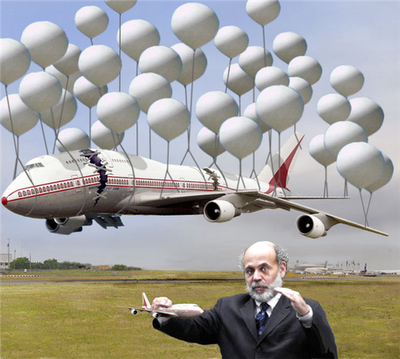
The economies of the United States and Europe are locked together in a slow-growth embrace. In America, the utter paralysis of politics in the run-up to a deeply polarized presidential election means that all hope for action now lies in the hands of Federal Reserve Chairman Ben Bernanke. In his speech at the annual Jackson Hole conclave for central bankers last month, Bernanke hinted that the Fed would deliver more “quantitative easing” if unemployment remained high. It has. Get ready for an announcement next Thursday, when the Fed wraps up its regular two-day meeting.
That’s  just about the only relief you will hear about coming from Washington in the foreseeable future, especially considering the red lines that President Obama laid out in his feisty speech accepting the Democratic nomination on Thursday night.
Obama referred to “decisions that will have a huge impact on our lives and our children’s lives for decades to come,” and he said again and again that he would “never” yield to what he considers unreasonable Republican demands on cutting the budget and giving tax breaks to the wealthy, on funding education and energy programs, as well as altering the health care system.
And with the political debate, such as it is, still entirely focused on cutting government, any further fiscal stimulus proposals will be DOA, much as Obama’s jobs plan earlier in the year. If the president is reelected, it’s a safe bet that negotiations over the “fiscal cliff” looming at year’s end will get bogged down in the usual  brinkmanship, and that no one will be talking about boosting unemployment.
Europe is suffering from a different form of political paralysis, but it is at least as intractable. As the euro crisis drags on, and elected leaders in Germany, France, and other major nations put off decisions on a more effective fiscal union, the only person stepping into the breach is Mario Draghi, the head of the European Central Bank. After playing coy for months, Draghi this week made his biggest move yet as the avowed savior of the eurozone when, in defiance of the powerful German Bundesbank, he announced an unlimited bond-purchase program that should help stabilize the debt crisis in countries such as Italy and Spain, at least for now.
What this means, in effect, is that the fate of the major economies—and very possibly Obama’s reelection chances—now rests on the way that two “New Keynesian” economists, Bernanke and Draghi, decide to use their vast balance sheets for more stimulus. It also means that Draghi has probably made himself, and the ECB, as powerful in Europe as Bernanke has done with the Fed in the United States. “Those betting on the demise of the euro may now have to realize that the ECB is as mighty as the Fed,” Holger Schmieding, chief economist at Berenberg Bank in London, told Bloomberg News.
For Bernanke and Draghi, the irony of their enormous influence right now is that this “is probably the most impotent time for monetary policy since the 1930s,” says former Federal Reserve economist Dennis Farley. “They’ve taken the standard [federal funds rate] instrument and driven it to zero, what Keynes called the liquidity trap. Keynes’ solution was fiscal policy, but that’s a nonstarter today. It’s a monster problem. The only thing the Fed can do is cross its fingers. Quantitative easing is a stopgap. It’s to make the public believe they’re on the case and to make sure rates don’t tick up.”
Farley adds: “Draghi may have the tougher problem. He’s kind of hinted that [the ECB] will buy Italian and Spanish bonds, but for what price? What is the proper interest rate to buy them at? The markets are saying 6 or 7 percent. He’s saying the market undervalues them.”
Marshall Auerback, a Denver-based portfolio manager and investment analyst who closely follows the moves of both central banks, says that Bernanke and Draghi both know they are playing with fiscal fire right now. If Bernanke pushes rates into “negative nominal” territory, this could actually have the effect of “a tax” on people’s income and net financial assets. That in turn could reduce their creditworthiness. Thus, paradoxically, with a QE3 Bernanke could actually make more fiscal stimulus necessary. Draghi, for his part, knows that he must tie renewed bond-buying to yet more fiscal austerity from governments, which will only put the troubled countries into a deeper hole than the one he’s trying to buy them out of. “Pick your poison,” says Auerback.
Both Bernanke and Draghi have expressed barely concealed impatience that the politicians they are supposed to be working hand in hand with have failed to resolve their differences. Deploying the usual opaque Fed-speak at Jackson Hole, Bernanke said that fiscal policy had become an “important headwind” holding back the economy. But he also worried that “persistently high levels of unemployment will wreak structural damage on our economy that could last for many years," and he alluded to similar problems that his old colleague Draghi is having across the pond.
What remains unknown is how much these two unelected world figures are coordinating with each other, but speculation is rife. Bernanke and Draghi are not only longtime acquaintances but also considered to be like-minded professionally. Both men got their Ph.D’s in economics at theMassachusetts Institute of Technology and studied under Stanley Fischer, one of the world’s most renowned economists (currently the head of the Bank of Israel). Like Fischer, both come strongly out of the New Keynesian tradition, acknowledging the need for government oversight and occasional intervention in tough times. According to a Fed official I spoke to in 2011, Bernanke and Draghi began consulting regularly after the latter was appointed in June of that year.
Given the limits in what they can do, both men have demonstrated an impressive ability to work themselves out of the policy boxes their respective politicians have left them in. Under Bernanke, the Fed opened new multitrillion-dollar lending windows, slashed its benchmark rate to virtually zero, and began a series of unconventional moves to push long-term interest rates lower. But the moves have not been enough by themselves to stimulate strong growth. Draghi has been just as constrained by politics. The European Central Bank's bias, strongly influenced by Bundesbank thinking, is toward ever-greater austerity and price stability. Draghi must also worry that if he continues to turn the ECB into a Bernanke-esque stimulus machine, investors in European debt could grow scared that the eurozone is no longer the bastion of sound money.
So more growth will be a close-run thing for the U.S. and European economies in the coming months, and a few ticks upward or downward could easily determine the outcome of the presidential election. Says Farley: “I think Ben is going to muddle through, and I don’t think the economy is going to go back into recession. But I think Europe is already in negative territory and they don’t know it."
President Obama, in his speech on Thursday night, seemed to warn his audience of the bad economic news to come. “I never said the journey would be easy,” he said. Tell that to the dynamic duo of Bernanke and Draghi.

Wednesday, September 5, 2012

Why Obama's Doing A Lousy Job of Selling Himself


In case you’ve forgotten, life for Americans was like this nearly four years ago to the week that President Obama will address the Democratic National Convention in Charlotte:
On Sept. 15, 2008, Lehman Brothers went bankrupt. The worst financial crisis since 1929 was just beginning. Money-market funds holding Lehman’s short-term debt began to drop, threatening to call in trillions of dollars in loans to the banking and nonbank sectors. Utter panic seized Wall Street, which was days away from collapsing. On Oct. 6, the Dow Jones industrial average began a hell-dive in which it fell 1,878 points, or 18.1 percent, over the next week. In all, by the end of the year, an astonishing $11 trillion of Americans’ net worth had disappeared. The plunge in wealth, denoted in suddenly shrunken 401(k) balances and wiped-out investment portfolios and underwater mortgages, was “far more dramatic” than what happened in 1929, Christina Romer later said during her stint as chairwoman of Obama’s Council of Economic Advisers.
It took most of that autumn of 2008 for the then-occupant of the Oval Office, President Bush, to realize he couldn’t give the “legacy speeches” he had hoped to deliver trumpeting eight years of economic achievements. Casting his free-market principles aside, Bush signed on to a historic and critical bailout, and his successor, Obama, doubled down on it. A second Great Depression was averted.
So there you have the most historically accurate answer to the question that is now dominating the 2012 presidential campaign. The mystery is why Obama and his campaign have so much trouble saying it.
Instead, over the past several days, the president seems to have played right into Mitt Romney’s plan to cast Obama as the Jimmy Carter of his era—the one president who, like Carter, is unable to say life is better now than when he took office.
Obama and his top aides have sounded defensive; at times, they have even seemed to echo Carter’s notorious 1979 speech about the “crisis of confidence” in America (which Carter didn’t seem to realize was mainly aimed at himself). Asked by a Colorado TV station how he would rate his performance, Obama replied “incomplete” and noted that others around the world, the Europeans and Asians, were also “going through a difficult time.”
True, Obama has some serious economic vulnerabilities. Polls show he is viewed unfavorably on the economy. He has failed to substantially help homeowners with underwater mortgages or persuade Congress to pass a second stimulus or a jobs plan.
Nonetheless Obama has occasionally—and could again—cast himself as the savior of the economy with at least far more persuasiveness than Carter ever could. Yes, the unemployment rate is still higher than when Obama took office (7.8 percent), but most economists would agree that the severe effects of the crash of late 2008 weren’t felt until later in 2009, when it exceeded 10 percent. The jobless rate has declined steadily since then.
The other mystery of the Obama campaign is why the president has seemed so reticent to champion his signature domestic achievement, a health care law that remains unpopular largely because people are puzzled by it—and because it is under constant attack by the GOP—but which contains provisions that Obama could argue help the beleaguered middle class, such as lifetime coverage and extending families’ ability to keep children on their insurance plans. Health care, says Jay Campbell of Hart Research, “is the big elephant in the room,” and the Obama camp must talk about it. “It will be a mistake if they don’t point to things they have done,” he said.
Thursday night’s speech is not too soon to start.

Monday, September 3, 2012

Killing the 'Reagan Narrative'


Once upon a time, in an era too distant now for many to remember, the Democratic Party’s “narrative” stood astride the national agenda. For a half-century stretching from the New Deal through the 1970s, Democratic thinking on both economics and foreign policy was dominant. The Republicans were a querulous, counterpunching minority, especially when it came to selling Americans on their philosophy. Even a GOP president as personally popular as Dwight Eisenhower had embraced Harry Truman’s Cold War containment doctrine, and he invested heavily in infrastructure, just as Franklin D. Roosevelt had.
But by the late ’70s, the dominant Democratic narrative began to flame out. Vast government spending on Lyndon Johnson’s Great Society programs and Vietnam War led to stagflation, while the Democratic foreign-policy consensus fractured over the defeat in Vietnam. By 1980, Ronald Reagan’s “revolution” against big government had begun, and the GOP had gained the high ground on foreign policy, preaching Reaganite “peace through strength.”
And this is pretty much where we still are today. For the past 30 years, it’s the Democrats who have been mostly counterpunching. Now, some leading Democrats who are looking to the post-Obama era in 2016 say it’s long past time to retake the narrative from the Republicans.
“I think since Reagan, they have done a very good job of setting the frame,” Maryland Gov. Martin O’Malley, one of a handful of Democrats some speak of as potential successors to President Obama, told me for a longer version of this story in National Journal. “The enemy is government. The enemy is taxes.… Taxes are things that must be eliminated. And the only good that comes from government is the elimination of taxes. So pervasive is this framework and this fairy tale gone wild that we found ourselves facing sequester, where we’re putting a higher premium on continued tax cuts for billionaires than we do on providing for a common defense.
“Too many of us started trying to adopt their message and repackage it as our own,” O’Malley added. Prominent examples: a “triangulating” Bill Clinton and a deficit-focused Barack Obama. O’Malley, who has just started a PAC of his own, is selling himself as a governor who has a frank policy of raising taxes to make Maryland one of the best-performing states in the country in education. “We’ve fallen so badly into their frame, the Reagan frame that government’s the problem, that even in those instances when we make it work … we’re too reluctant to talk about it,” he said. “Talk about how you improve education, how you get test scores going in the right place, how you create jobs, how you turn around an auto industry.”
O’Malley is more forthright than others, but hardly alone in this Democratic self-criticism. One hears a similar—though more subtle—critique even from Obama, the party’s current leader who has wistfully invoked Reagan since 2008, and one hears from other future would-be Democratic leaders how hard it’s been to kill off the hated “Reagan narrative.”
It’s not that Obama hasn’t tried to create his own. He delivered the biggest social reengineering program since Medicare with his health care plan. He has sought to recapture Democratic self-confidence in national security and defense with his aggressive use of drones and special-operations troops.
But the hard truth is that, on most issues, Obama’s agenda is still largely shaped and defined by the Republicans and charismatic budget-cutters such as GOP vice presidential nominee Paul Ryan rather than the other way around. Can anyone change the conversation? A frank look at the likeliest candidates for the Democratic nomination in 2016 suggests that this current crop—with the possible exception of O’Malley—is unlikely to do much better than Obama has. “For the most part, what our country needs right now is not less; it needs more,” O’Malley said.
There may be a vision—or at least a slogan—in there somewhere.