Friday, October 18, 2013

The Unbearable Lightness of Being Hillary


In the innermost sanctum of Clintonland, it is difficult to imagine that Hillary and Bill, two of the savviest politicians in the country, are not pinching themselves to make sure that it's all real. Perhaps they're dancing a jig together, or knocking back shots and howling at the moon out of sheer, giddy joy at their good luck. (OK, Hillary's not howling, but Bill might be.) Or maybe they are just quietly kvelling over the latest turn of events.
Because the trend lines are unmistakable, and they're looking better all the time: If she wants to run in 2016, Hillary Rodham Clinton could have the easiest walk into the White House of any candidate in either party since, well, one has to go back a very long way. Maybe to Reagan in '84. LBJ in '64, or Eisenhower in '52, or even FDR in 1932, 1936 and 1940. The presidency is looking like it's hers to lose, more than ever.
The reasons are becoming more obvious with each passing crisis of Republicanism, but are even starker now in the wake of the GOP's embarrassing implosion over the shutdown and debt-ceiling fight. This is an opposition party in such a state of extreme dysfunction that talk of a third-party split in 2016 is almost irrelevant. Why would you need a third-party split to win—as Bill did, recall, cheating George H.W. Bush out of a second term in 1992 thanks to the Ross Perot candidacy—when the base and establishment of the GOP are no longer on speaking terms?
Remember when poor Mitt Romney, who even in the best of fettle was not a very smooth or relaxed guy, twisted himself into an unrecognizable pretzel to win over the base? When a man who'd been a fairly effective Massachusetts governor felt he had to disown his greatest achievement, universal health care, and virtually emasculate himself before the general election in order to triumph in the primaries, thus losing all credibility (or at least identity) by the fall? When Romney believed he had to out-Santorum Rick Santorum, the man once voted the second dumbest senator, and go even more conservative on immigration than not-ready-for-prime-time Rick "Oops" Perry?
Well, guess what, it's only gotten worse for reasonable Republicans who might have a shot at winning a general election against a popular Democratic nominee. Whatever rational, impressive candidate lays claim to the GOP nomination in 2016 -- say, the popular, newly trimmed-down but currently-all-too-moderate New Jersey governor, Chris Christie -- is now going to have to out-Cruz Ted Cruz. And that's just not possible. Finding a place to the right of Ted Cruz, as brazen a demagogue who has come along in American politics since Huey Long, is like reaching the edge of the Internet and then trying to go beyond. You can't do it. Nor would you want to try. Nor could you ever win a general election doing so.
Hillary, meanwhile, can cruise to the Democratic nomination. She is head and shoulders above any possible challenger, the polls consistently show. Yes, OK, we all said that before the 2008 campaign too, when suddenly a phenom named Barack Obama came along. But let's be real: The Obama candidacy was like a perfect storm, a hundred-year event, a freakish thing. Martin O'Malley is never going to be mistaken for a phenom. Nor is Andrew Cuomo. Joe Biden? Democrats love him, but he can't touch her either. And you can be sure the Clintons are not going to make the same mistakes they did in 2008, bypassing the smaller Democratic caucus states because they underestimated the Obama insurgency.
The demographic numbers tell a grim tale for any potential GOP candidate at the same time as they look like manna from electoral heaven for Hillary. The Republican Party, still in the grip of tea-party extremism, is more and more becoming the party of disaffected and aging white voters. Even many Republican strategists are conceding that no GOP presidential nominee can win that way. But the party is not building itself a bigger tent fast enough: Strapped down by House extremists who can't think beyond the demands of their scarlet-red districts, or beyond the next two years, the GOP is not likely to embrace immigration reform despite Marco Rubio's efforts, thus continuing to alienate the burgeoning Hispanic vote that so doomed Romney. As my colleague Ron Brownstein wrote recently: "Absent big GOP gains with minorities, [Clinton] could win, even comfortably, just by maintaining Obama's showing with whites … [But] the first 2016 polling instead has generally shown her trimming Obama's deficit among whites both nationally and in key states."
GOP strategists will say they're changing the rules, cutting the number of primary debates so the next Republican nominee is not subjected to the same "traveling circus" (as national chairman Reince Priebus called it) that Romney was. But that's not going to change the tenor of those debates, in which the candidates will have to outflank each other on the right. They also say, well, you'll see, the tea party movement is fading, or at least becoming more manageable. But it's not, as we saw when 144 Republicans in the House voted against the reopening of the government and extension of the debt ceiling Wednesday night, costing John Boehner the support of most of what used to be known as "his" caucus. More to the point, several of those who might be considered serious GOP 2016 contenders for the presidency also voted in favor of the first default in American history in order to stay in the tea party's good graces, including Paul Ryan, Cruz, Rubio and Rand Paul (supplying the first fodder for those Hillary 2016 attack ads). We'll no doubt see a resumption of GOP extremism in coming months when the two parties battle over spending cuts leading up to the next debt-ceiling deadline on Feb. 7. The tea party is still dictating terms to the GOP establishment, and those terms are just too conservative for the general electorate. And who is now the point man for the GOP in budget negotiations? Ryan.
Yes, Hillary has some vulnerabilities. There are still plenty of Clinton haters out there. John Kerry appears to be eclipsing her record as secretary of State already, and then there's Benghazi, which the Republicans will resurrect gleefully if she runs. But in truth the mistakes of Benghazi, which branded Clinton as the first secretary of State to lose an ambassador in the field since 1979, are not going to stand up to scrutiny. It's wild conspiracy theory, utterly unproven (in fact it's been disproven), to say that Clinton covered up what was known about the Benghazi attack. It won't work in 2016.
So, if she wants it, the broad center of American politics – and the White House—may well be Hillary Clinton's for the taking. We await her decision. But she and Bill must be feeling pretty good about it now. Maybe even a bit giddy.

Wednesday, October 16, 2013

How the Economists--and the Nobel Prize Committee--Are Still Failing Us


Who is more irrational: the tea party or the Nobel Prize committee? That's a pretty close call this week.
Tea party libertarians base much of their view of the world – and their current efforts to blow up Washington – on the simplistic idea that government is always bad and markets are always good. The more freedom, the better for all. The Nobel Prize committee effectively endorsed this concept on Monday by awarding the 2013 prize to the University of Chicago's Eugene Fama, whose "efficient markets hypothesis" was mocked even by the father of modern free-market economics, Milton Friedman, but which forms a fundamental justification of the world view that tea partiers, many of them unknowingly, live and breathe. That's the long-since debunked view that markets, especially financial markets, are always rational, so just let 'em rip. No regulation needed. No government needed.
So irrational was the Nobel decision that even the committee second-guessed itself; it simultaneously gave a piece of the 2013 award to Yale's Robert Shiller, whose life's work has sought to show that Fama's theory is "one of the most remarkable errors in the history of economic thought." (This is perhaps Stockholm's idea of what Wall Street calls a "hedge.")
Shiller has developed a field of "behavioral economics" fleshing out John Maynard Keynes's idea that irrational "animal spirits" drive markets more than policy-makers realize. If we needed any more proof of that, we got it in 2008, when we realized that virtually every Wall Street CEO and the biggest, most sophisticated banks in the world had no clue what they doing and would have destroyed themselves en masse had not the government (yes, the government) stepped in to save them at taxpayer expense.
Why does any of this matter now? Because in spite of the ample evidence before us, we in Washington still live in the free-market fantasy world that Ronald Reagan ushered in, that even President Obama has lamented he has not been able to alter, and which the work of economists such as Fama has propagated. Yes, we know that freer markets are better than "command" economies of the communist ilk. The end of the Cold War proved that as the United States essentially bankrupted the Soviet Union out of existence; even Beijing concedes this, as would the extinct dinosaurs of the Soviet era.
But it's long past time for the pendulum to swing back to the middle from the extreme conclusion that this means fully free markets always work well. They don't. The United States is, in truth, not a free-market economy but a "mixed" economy. As the great economist Paul Samuelson once wrote, the end of the Cold War meant only that "victory has been declared in favor of the market-pricing mechanism over the command mechanism of regulatory bureaucracy." The victor was plainly not pure laissez-faire capitalism but simply a more balanced economy—markets modified by government taxes and government-orchestrated transfers of wealth to limit inequality, and government monetary and fiscal policies to curb recessions and inflation.
The truth is not simple or rational, in other words, and in fact financial markets, most economists have long known, are the least rational of all,contra Fama. Even Milton Friedman didn't buy Fama's ideas, one of the late economist's students, Robert Auerbach, now a professor at the University of Texas at Austin, told me in a 2010 interview. Friedman asked his students: How could it be that all available information is instantly translated into price changes in a completely rational way, as Fama argued in his hugely influential theory, which opened the door to the kind of across-the-board deregulation that led Wall Street to almost destroy the global economy in the mid-2000s? Friedman pointed out that "traders couldn't make any money if that were true," Auerbach said.
Ironically, considering that it was tea-party antipathy to Obamacare – to "the government getting involved in health care"—that has put the United States on the precipice of default and economic disaster, some of the best economics work of recent decades has shown that the health care industry is one in which free markets don't work well. The Nobel-winning economist Joseph Stiglitz, among others, has demonstrated that this is because of the lack of good information shared between insurance companies and those they insure. The companies are habitually suspicious that their clients aren't forthright about their health and therefore always look for ways to deny coverage, like "preexisting conditions." Moreover, most health care is not a tradable "good"—everyone offers a different kind of service – and people rarely make "rational" decisions in health care. That's why many economists support universal coverage supplied or guaranteed by the government, or the idea of a public option. But you haven't heard much about that in the Obamacare debate, and of course as a sop to the free-marketers the public option was replaced by health care exchanges.
Obama himself has lamented the prevalence of a zeitgeist of free-market absolutism. Facing the debt-ceiling crisis in 2010, the president complained privately to a group of liberal economists how hard it was "to change the narrative after 30 years" of a small-government zealotry dating back to the Reagan presidency, according to one of the participants. In an interview last year, Maryland Gov. Martin O'Malley called it a "fairy tale gone wild." "Since Reagan, [the Republicans] have done a very good job of setting the frame and setting the story," O'Malley, a putative challenger for the 2016 Democratic presidential nomination, said. "The enemy is government. The enemy is taxes.… Taxes are things that must be eliminated. And the only good that comes from government is the elimination of taxes."
Economics, which flatters itself that it is a science (another myth perpetuated by the Nobel committee), should be helping us out of this confusion, but it is not. Should government be reined in? Of course. But the kinds of economic ideas that would allow a rational discussion of a mix of government and markets, spending cuts and revenue increases, no longer prevail in Washington, at least on the Republican side. And so we find ourselves in this perpetual non-debate, going from shutdown to shutdown and debt ceiling to debt ceiling, an endless state of brinksmanship fueled by misbegotten ideas. And the news from Stockholm isn't helping.

Thursday, October 10, 2013

Why Yellen Will Be Tougher on Wall Street than Bernanke


Most of the commentary about Janet Yellen, President Obama's historic choice to lead the Federal Reserve, is focused on her views about controlling inflation and unemployment, the Fed's twin mandate. (And here, promisingly, the "dovish" Yellen has said clearly that she is more concerned about unemployment, which is a huge problem, than she is about inflation, which presently is not.)
But another huge part of the Fed's job, especially since the 2008 financial crisis, is re-regulation of the banking system and Wall Street, where Yellen will finish the task that Ben Bernanke started. And here, too, while her track record is not quite as pronounced as it is on monetary policy, she is expected to be very aggressive in reining in risky practices. Yellen, who is almost certain to be confirmed by the Senate, may turn out to be even bolder in her prescriptions than Bernanke or the Obama administration have been, according to officials who have watched Yellen from the inside of the Fed during her three years as vice chairman.
For now, Wall Street is reacting mostly favorably to Yellen's long-anticipated appointment, thanks to her dovish views on inflation and the likelihood that she will not support "tapering" off Bernanke's quantitative easing program, so as to spike the economy's still-tepid growth and ease long-term unemployment.
But the banking community may not quite know what it is getting.
Yellen's views are considered very close to those of Daniel Tarullo, a progressive-leaning Fed governor and expert on global financial regulation whom Bernanke has deputized to oversee new banking and capital standards. In her public remarks, Yellen has echoed Tarullo's push for higher capital standards for "systemically important" or too-big-to-fail banks, and his concerns about curtailing the unstable short-term funding sources of too-big-to-fail banks. Tarullo has been more aggressive than the Obama administration in proposing "a set of complementary policy measures" that goes beyond the Dodd-Frank law. Among them: limiting the expansion of big banks by restricting the funding they get from sources other than traditional federally insured deposits.
Yellen, in an important speech in Shanghai, China in June, went beyond what Bernanke has said by explicitly endorsing some of Tarullo's efforts, saying, "I'm not convinced that the existing SIFI [systemically important financial institutions] regulatory work plan, which moves in the right direction, goes far enough." She also spoke of doing much more, as Tarullo has, to constrain the "shadow banking" sector that caused so much trouble in 2008, including broker-dealers and money market funds. Yellen said "a major source of unaddressed risk" is the hundreds of billions of dollars of short-term securities financing used by these firms, adding: "Regulatory reform mostly passed over these transactions."
Michael Greenberger, a former deputy director of the Commodity Futures Trading Commission and a leading voice for more transparent regulation of derivatives and other arcane Wall Street products, says that Yellen backed his stand for a tougher Dodd-Frank law than the Obama administration, Senate, and House were advocating back in 2010—a time when a fierce fight raged over the historic legislation to reorder the financial system. "I told her about weaknesses in the then existing Senate draft bills and the House bill. She was clearly sympathetic to my concerns, which, in turn, were a reflection of progressive legislative advocacy at that time," Greenberger said this week, recalling a talk he and Yellen had at the so-called Minsky conference in New York, where she gave the keynote address (noteworthy in itself, given that it is named for the late economist Hyman Minsky, who presciently described how financial markets are inherently unstable). Adds Greenberger: "The Obama Administration was not being particularly helpful about these substantive concerns. Compared to the powers that be at that time on the Hill and at the White house, she was a breath of fresh air."
Yellen is thus likely to continue a distinguished line of female regulators who have demonstrated a striking degree of vision, courage and integrity in taking on one of the most chauvinistic of industries, Wall Street. Among her predecessors and peers: new Massachusetts Sen. Elizabeth Warren, who has used her position on the Banking Committee to dress down Wall Street CEOs and the prosecutors who have failed to go after them; Sheila Bair, the former chairwoman of the Federal Deposit Insurance Corp. who angered then-Treasury Secretary Tim Geithner by pushing for harsher treatment of banks during Obama's first term; retired regulator Brooksley Born, who like Bair ran up against accusations that she wasn't a "team player" in the old boys' club when she sought to rein in over-the-counter derivatives trading back in the 1990s; and most recently Mary Jo White, the no-nonsense head of the SEC who has warned she's going to crack down much harder on Wall Street fraud.
Yellen, a former economist at the University of California at Berkeley, has a notable pedigree of skepticism about Wall Street's proclivities: A student of arch-market-interventionist James Tobin at Yale—who famously proposed a tax on financial transactions—she is also the wife and writing partner of George Akerlof, who shared the 2001 Nobel Prize in economics with Joseph Stiglitz for work that showed how markets can fail thanks to imperfect information. As such, she is likely to be even tougher than Bernanke, a former free-marketer and Republican nominee who changed his views somewhat after 2008 and has since turned the Fed into a major interventionist force in the economy.
The late Tobin and Akerlof fought career-long battles to make the case that financial markets work differently, and are more inherently prone to failure, than ordinary markets in goods and services. Their work has tended to back the prescription of John Maynard Keynes, as far back as the Bretton Woods conference in 1944, that "nothing is more certain than that the movement of capital funds must be regulated." In a 2010 interview, Akerlof said he "was always apoplectic" at the kind of rapid deregulation advocated by Harvard economist Larry Summers, who almost certainly would have been nominated in Yellen's place had he not backed out last month—in particular, the abrupt opening up of capital flows around the world, which has arguably led to financial bubbles in one economy after another.
While Yellen did not always act on regulation when needed—claiming that as head of the San Francisco Fed she had to wait on Washington's guidance—the record shows that she appeared to be somewhat ahead of Bernanke in appreciating the dangers of the securitization-led housing bubble. At the Fed's June 2007 she warned that the failing housing sector was the "600-pound gorilla in the room." That was only a month after Bernanke, in congressional testimony, said he saw only a "limited impact of subprime mortgages on "the broader housing market."
Yet Yellen also offered up a refreshing mea culpa after the financial collapse, telling the Financial Crisis Inquiry Commission in 2010 that she "did not see and did not appreciate what the risks were with securitization, the credit ratings agencies, the shadow banking system, the S.I.V.'s [structured investment vehicles]— I didn't see any of that coming until it happened." That remark was also a striking contrast to Summers, who has never acknowledged his far-greater responsibility for deregulatory policies that helped created the worst-ever financial crash in U.S. history.

Friday, October 4, 2013

Who Really Created the Tea Party? Guess...


Reprinted from National Journal

During his five years in office, President Obama has often blamed his problems on what George
W. Bush left him with: two wars, a historic recession, an out-of-control financial system and a
huge budget deficit. But W.’s most enduring legacy to his successor may have been the tea party
movement, and the political dysfunction that it has brought.

That may seem an odd conclusion. Today Obama is the central villain in tea-party rhetoric, and
Bush is hardly ever mentioned. Yet the rebellion against Big Government that the tea party has
come to embody really began more than a decade ago with a growing sense of betrayal among
conservatives over Bush’s runaway-spending habits. Conservatives were angered by his refusal
to veto any spending bills, especially in his first term, not to mention what happened during
the nearly six years of GOP control of the Senate and House from 2000 to ’06, when federal
spending grew to a record $2.7 trillion, more than doubling the increase during Bill Clinton’s
two terms. The final outrage that lit the brushfires of tea-party fervor was Bush’s sponsorship of
the $700 billion Troubled Asset Relief Program in the fall of 2008, just before he left office, in
order to bail out Wall Street.

It is arguably true that President Obama’s decision in 2009 to pile a giant stimulus and a new
national health-care program on top of TARP transformed those brushfires into a true national
conflagration—and a movement. But in reality Obama’s actions were more like a tipping point,
many conservatives say. “This social and political phenomenon of the tea partiers was burning
all through the Bush years,” Reid Buckley, brother of the late William F. Buckley and the self-
appointed keeper of his flame as a father of modern conservatism, said in a 2010 interview.
“It’s a long-term slow boil that has disaffected most people who call themselves conservatives.
There’s nothing I have against President Obama that in this I wouldn’t charge Bush with.”
It wasn’t just spending of course. Bush also built the intrusive post-9/11 national-security state
that Obama has embraced, and which a growing number libertarian tea partiers have come to
hate, including National Security Agency surveillance and a program of frequent but secret drone
strikes.

True, on many issues, Bush gained enthusiastic conservative support. Among them were his
hawkish response to the 9/11 terrorist attacks; his abandonment of the Kyoto Protocol and
resistance to domestic efforts to reduce the carbon emissions linked to climate change; his
conservative nominees to the Supreme Court; the two large tax cuts he passed in 2001 and 2003
(the latter was the first tax cut approved during wartime in American history); and above all,
his 2005 attempt to restructure Social Security, the pillar of the public social safety net, into a
program that relied less on government and more on markets to deliver economic security.

Yet throughout his presidency, Bush was far more comfortable with an assertive role for
Washington than many conservatives were. They recoiled from his proposals to expand the
federal role in education, create a prescription-drug benefit under Medicare and establish a
pathway to citizenship for millions of illegal immigrants.

On some of these issues—especially the post-9/11 response and the war in Iraq—a sense of
patriotism and party loyalty papered over growing conservative discontent with Bush’s fiscal
irresponsibility and national-security recklessness. But the fissures in the party were quietly
widening. Among the conservatives who cooled on Bush were some of today’s intellectual
champions of the tea party, such as Jim DeMint, the former senator from South Carolina who
now heads the Heritage Foundation and is a leading player in the Obamacare standoff; and Tom
Coburn, the zealously fiscally conservative senator from Oklahoma. For DeMint, Bush’s TARP
and stimulus in the fall of 2008 were “the last straw” in his disaffection from Bush, an aide to the
senator said. “There’s a lot of affection for Bush because of how passionately he fought the war
on terror. But as far as domestic policy goes, conservatives felt betrayed.” Coburn, in a speech
on the Senate floor in October 2005, inveighed against the remorseless earmarking of his fellow
Republicans and the spending of the Republican-controlled White House. “All change starts with
a distant rumble, a rumble at the grassroots level, and if you stop and listen today, you will hear
such a rumble,” he said.

Coburn spoke then of “committees full of outraged citizens” forming in the heartland. He
supported the Porkbusters movement led by Glenn Reynolds, a blogger (Instapundit) and law
professor from Tennessee, which resembled a dress rehearsal for the tea party movement. “It
started when Republicans were in charge,” Coburn told National Journal a few years ago. He
added that Bush’s “Medicare prescription drug plan—that was the worst thing imaginable, $13
trillion in unfunded liabilities.”

George W. Bush left behind many baleful legacies, among them a $3 trillion war in Iraq that
didn’t need to be fought, and the worst financial crisis since the Great Depression. But he also
helped to fracture his own party—and thus Washington.


.

Thursday, August 15, 2013

Egypt and The Death of Hope


As the Egyptian military consolidates control by murdering pro-Muslim Brotherhood protesters and declaring a state of emergency, we may be witnessing the most dangerous potential for Arab radicalization since the two Palestinian intifadas. Despite the resignation Wednesday of Mohamed ElBaradei, the vice president, in opposition to the Egyptian junta's action, the discomfiting fact is that most of Egypt's liberal "democrats"—along with the United States—have never looked more hypocritical. If the bloody crackdown is allowed to continue while the U.S. and West do nothing, the actions of the Egyptian military could de-legitimize democratic change in the Arab world for a generation or more.
And for Washington, a dream that began with the neoconservative push to turn Iraq into a "model democracy" after the 2003 invasion—the somewhat naïve Western hope that the Arab nations would catch up with the rest of the world—may already be dead. Worse, the loss of moderate Islamist alternatives, and the failure of democracy, could supply al-Qaida with its biggest recruiting campaign since 9/11.
The images in Egypt are excruciating to behold, both in a literal and philosophical sense. In what appeared to be more of a direct military assault than a police-style crowd-clearing exercise, Egyptian forces killed more than 500 people, most of them supporters of ousted President Mohamed Morsi who were engaged in nothing more offensive than a series of sit-ins. Suddenly, in one awful day, the exercise of the democratic rights and ideals that are so dear to America's self-image—and which have formed the heart of U.S. foreign policy since the end of the Cold War—were rendered all but irrelevant to many Arabs, especially because of Washington's mild response. Apart from a few dissenters such as ElBaradei, the once-inspiring secularists who massed in Tahrir Square to oust Hosni Mubarak have now repudiated those democratic rights and values by continuing to support the bloody crackdown. And while the Obama administration issued a rote condemnation, the lack of any more dramatic response continues to fritter away what little moral authority America has left.
The administration's initial response, voiced by White House spokesman Josh Earnest from the president's vacation spot on Martha's Vineyard, was mostly an exercise in posterior-covering. Earnest urged the Egyptian government to refrain from violence even as the violence was fully underway. He added that "we also strongly oppose a return to a State of Emergency law, and call on the government to respect basic human rights such as freedom of peaceful assembly, and due process under the law," even as the Egyptian government was clearly not respecting any of those things, and had already declared a state of emergency.
Secretary of State John Kerry also condemned the military's actions, calling "this a pivotal moment for all Egyptians," but then left the podium without taking questions.
What the administration must also consider—and it has been well behind the curve here—is that Egypt may only be the current epicenter of the radicalization phenomenon. The danger goes well beyond Cairo. Consider:
  • In Iraq and Syria, a newly renamed al-Qaida umbrella group calling itself the Islamic State of Iraq and the Levant is dramatically expanding its presence in both countries, The Washington Post reported Tuesday.
  • In Tunisia, where the Arab Spring began, the secular opposition and the ruling Islamist Ennahda party have grown more and more polarized, and two leading secular politicians have been assassinated. The secularists, apparently inspired by the ouster of Morsi in Egypt, have held daily mass protests in an effort to dissolve the national assembly.
  • Even in Afghanistan there is a danger of re-radicalization despite the hundreds of billions of dollars and thousands of lives the United States spent there in what has amounted to America's longest war. According to a report in The Wall Street Journal, President Hamid Karzai is considering anointing as his successor the man who brought Osama bin Laden to the country, Abdul Rasoul Sayyaf, an Islamist warlord and the man who mentored 9/11 mastermind Khalid Sheikh Mohammed.
Marc Lynch, an expert in the Arab world at George Washington University, says that if the Muslim Brotherhood separates itself permanently from the democratic process—and its leaders have vowed to do so until Morsi is restored—then the moderate Islamists the West was hoping to bring into the government may grow scarce.  That, in turn, will empower and reinvigorate the more radical al-Qaida-linked groups who preach the use of force. "What Islamist can now plausibly argue that democratic participation works?" he says. "Many Islamists will likely pull back from politics for a while, go underground, or retreat to charity work, but some portion are going to find extremist ideas much more convincing now. Only takes a small number to make a difference, remember."
Lynch's assessment is endorsed by Reuel Marc Gerecht, a former CIA expert in the region and a conservative commentator at the Foundation for Defense of Democracy. "For radical Islamists who thrive on tyranny, the Nile Valley has again become exceptionally fertile ground," Gerecht says. "The secular crowd blew it. They can try to walk away from the military now … but it's too late. Egyptian society is badly, probably irretrievably, polarized with the potential for horrendous violence. The secular crowd who thought they'd pulled off a 'coup-volution' with Morsi's downfall have guaranteed that we only see devolution in Egypt, either to an increasing sad, morally corroding, impoverished society, where liberals have no future, or to an explosion that may consume the country."
Fawaz Gerges, director of the Middle East Center at the London School of Economics, agrees that an excessive fear and loathing of the secularists for Morsi and the Brotherhood may have triggered the current disaster, and it's difficult to see how to turn things around. "The secular-leaning opposition never allowed Mohamed Morsi a honeymoon period," Gerges says.
In the saddest irony of all, the ultimate outcome could be a return to the Arab ancien regime: the pre-Arab Spring world of retrograde military rule, with radical Islamists as the generals' chief opposition. "There have already been calls by extremists, such as Ayman al-Zawahiri, current chief of al-Qaida, to renounce the electoral box and rely on force as the most effective means to establish God's kingdom on earth," says Gerges. "Although the majority of Islamists will not buy Zawahiri's faulty goods, some would do so out of rage at the hijacking of the toppling of the first democratically elected Islamist president in Egypt's modern history." 
As it has for the last two years, the Obama administration is still struggling with the appropriate response. But the perception abroad is that the administration has vacillated without any coherent policy. Initially during the Arab Spring the administration defended its old autocratic allies, such as Egypt's Hosni Mubarak and Yemen's Ali Saleh. Then it moved to championing the young secularists in the street, with hopes of liberal democracy that now look as naive as the visions of the George W. Bush-era neoconservatives. After the election of Morsi, the administration lurched in yet another direction, embracing the Islamist president and the Muslim Brotherhood, even to the exclusion of secularists. And when Morsi was ousted on July 3, the administration avoided calling it a coup so as not to jeopardize its aid relationship with the Egyptian military.

To be sure, there was never any easy course—no obvious choice between an alarmingly Islamist president, which Morsi was becoming, and the military junta that succeeded him. But for months critics of the administration's approach have been urging it to at least speak loudly and clearly, using the $1.3 billion in U.S. aid and military supplies as leverage, in demanding that first the Morsi government and then the military junta uphold democratic principles. That did not happen. And it may be too late now to alter the terrible path that Egypt is on.

Thursday, August 8, 2013

Is Jeff Bezos What Thomas Jefferson Was Thinking of?

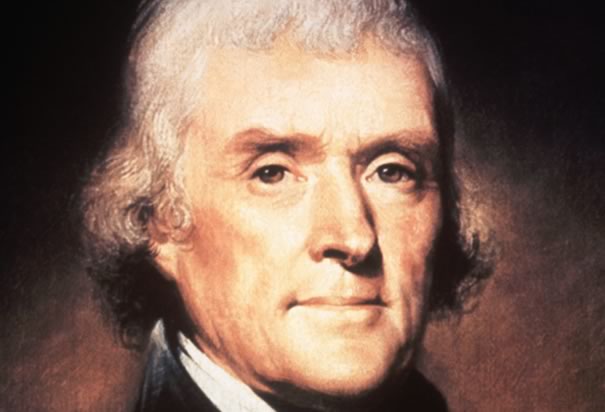
During the early First Amendment debates over the survival of the infant democracy called the United States of America, Thomas Jefferson famously wrote: "Were it left to me to decide whether we should have a government without newspapers, or newspapers without a government, I should not hesitate a moment to prefer the latter."
Although he obviously had no inkling of the Internet age, we are now approaching the moment that Jefferson feared: Newspapers are disappearing or are, alternatively, becoming mere vanity presses for vastly wealthy people like Jeff Bezos, who may or may not have the nation's best interests at heart as they add what is effectively intellectual bling to their collections of art, cars, or mansions.
And this is happening at a moment when, as Jefferson also feared, government has grown huge, superpowerful, and all but out of control. The government is paralyzed on policy choices, and the debates that occur in the nation's capital are, increasingly, unchecked by reliable information, of which The Washington Post is one of the country's last major national conduits.
The response of those who take an optimistic view of Bezos's surprise purchase of The Post--as well as other recent Silicon Valley takeovers of old media, such as Facebook cofounder Chris Hughes's acquisition of The New Republic--is to say that this is the natural order of things. These are the media's new barons; if the old ones got rich on railroads or oil or Wall Street (the provenance of Eugene Meyer's fortune when he started the Graham family media empire by buying The Post in 1933), the Bezoses earned their way in from Silicon Valley. So what? And the Internet Age, after all, has supplied us with oceans of information that were once available only through newspapers.
But this may be a fool's paradise. Eugene Meyer (Katherine Graham's father and current Washington Post Co. Chairman Donald Graham's grandfather) wasn't just some rich guy. He was a passionately involved patriot and denizen of Washington, D.C., who served in and out of government, including a stint as Federal Reserve chairman, and who spent a good part of his fortune over 20 years buildingThe Post into a great newspaper. And for decades, the Grahams were the center of Washington life, devoted and generous caretakers of The Post and the once-great magazine I used to work for,Newsweek.
Bezos, by contrast, is a classic West Coast techno-libertarian who most likely sees Washington as a toxic-waste dump to be avoided whenever possible (and he told Post employees in a letter Monday that he would indeed be an absentee landlord). One of the last great national newspapers--what Jefferson insisted was necessary to functioning of American democracy--is now the Amazon founder's personal toy, its fate the subject of his whimsy. If The Post were to disappear from the Earth tomorrow, Bezos would lose less than 1 percent of his personal fortune. Yawn. What's next?
Oh, well, you might say, that's also the natural order of things. Print is dying. Digital rules. But unfortunately, just as Bezos may not be the ideal substitute for Meyer, digital is proving to be a dubious replacement for print when it comes to reliable information. The Internet has only encouraged the disappearance or marginalization of formerly trusted conduits of information. What was once a continent of responsible news gathering, led by major trusted news outlets (including ThePost and Newsweek), has become a sea of crap. The continent has been washed away, and all that is left are a few eroding islands of reliable sources. Especially for young readers, there is no direction home any longer. What's the home truth on immigration? The national debt? The tax code? How to produce economic growth? Which website will tell you the truth? None, really. Almost all are ideologically skewed. The advent of "fact-checker" columns at The Post and other newspapers has been a good trend, but they just can't keep up with all the bad information.
No better evidence of this exists than Capitol Hill, where junk science and misinformation rule in every debate from climate change to stimulus spending. As New York's Republican mayor, Michael Bloomberg, seemed to realize during last year's president campaign, when he came out for Barack Obama just after Hurricane Sandy, by the time we wait for our legislators to separate the real information from the false, Manhattan may be under water.
As Jefferson divined, the dissemination of good information is necessary to the functioning of a democracy. "The basis of our governments being the opinion of the people, the very first object should be to keep that right," he wrote to Edward Carrington in the January 1787 letter in which his famous quote about newspapers appears. And after writing that newspapers were more important than government, Jefferson clarified that this meant "that every man should receive those papers and be capable of reading them."
People aren't receiving them nearly as much today; what they are receiving instead is too often tainted information on the Internet. If that trend continues, can American democracy still function? Jeff Bezos is a very smart guy, and no one has ever had reason to doubt his patriotism. So perhaps helping to correct this problem is just what he has in mind. "We will continue to follow the truth wherever it leads," Bezos wrote to Post employees.
But Bezos is also a frugal businessman with a passionate customer-first retail philosophy who is entering a business that is by its nature expensive and inefficient: news gathering. So the truth may lead him elsewhere. It will be up to him to see the larger value in that to the country. Let's hope he does.

Wednesday, August 7, 2013

Why We Should Worry about Larry Summers

In the whispering campaign that accompanies every big-time appointment in Washington, Lawrence Summers is now said to be favored by President Obama over Federal Reserve Vice Chairwoman Janet Yellen to succeed Ben Bernanke as Fed chairman. But if that is the president's desire—and he insists he hasn't made his choice yet—then Obama probably knows that he may end up fighting the biggest battle for a nominee since naming Chuck Hagel as his Defense secretary.
What is the main objection that critics in Congress and elsewhere have to Summers? It is certainly not the Harvard economist's formidable intellect, nor his middle-of-the-road views on monetary policy. Nor is it his considerable prowess and record as an economist or even his notoriously prickly personality. The complaints about Summers revolve more around questions of integrity and character—more specifically, his career-long inability to admit the serious errors he has made as a senior policymaker, even when they have been staring him in the face.
It is a disturbing record, in the eyes of many critics. Nowhere, of course, is the art of avoiding responsibility for one's actions so highly developed as in Washington. But even in the nation's capital, there are few more masterful practitioners of this art than Obama's former chief economic adviser. And that may be a worrisome characteristic for a man with his hands on the central levers of economic power, a post that, despite semi-annual congressional hearings, enjoys scant oversight.
And it is an issue that is almost certain to come up, in various forms, during confirmation hearings.
Consider, as evidence, Summers' op-ed in The Washington Post in March of last year, as economic growth lagged and criticism mounted that he had failed to push a big-enough stimulus measure on Obama in 2009. He began the piece, in Summers-like fashion, with a preemptive strike on all the critics who are saying that he failed the president with bad advice and bad policy. Summers wrote: "Economic forecasters divide into two groups: those who cannot know the future but think they can, and those who recognize their inability to know the future." In other words, Summers was saying, "It is utterly impossible to know what will happen to the economy in the future. The smart ones, like me, won't even try."
This appeared to be Summers' way of absolving himself for what critics were ticking off as a series of major mistakes: his failure to appreciate the dimensions of the economic crisis, to push for a large-enough stimulus and a deep-enough housing fix—and perhaps as well for the major errors he made in his previous incarnation as Bill Clinton's Treasury secretary, when he oversaw financial deregulation that set the stage for the worst collapse since the Great Depression.
Furthermore, Summers wrote, "such recovery as we are enjoying is less a reflection of the natural resilience of the American economy than of the extraordinary steps that both fiscal and monetary policymakers" – guys like him, that is – have taken. Summers then drew tightly around him the Olympian robes of the Harvard academic, urging Washington's policymakers not to withdraw the economic medicine he had administered.
Let's briefly remove those robes and have a look at the record underneath. In truth, during his nearly three years as Obama's chief economic adviser (as has been the case throughout his career), Summers was surrounded by more prescient, high-level naysayers who urged him to take more dramatic action, who did sense that the economy needed deeper fixes. The record shows that he dismissed them at the time, and then later on pretended their advice didn't exist.
Take housing. The mortgage market, though it is recovering, is still one of the biggest drags on a still-deleveraging economy, with nearly half of homeowners underwater a full five years after the financial collapse. Yet the record shows unmistakably that the same administration that shoveled hundreds of billions to the Wall Streeters who had fraudulently sold all those mortgage-backed securities has had little sympathy for mortgage holders who got shafted. Summers and Treasury Secretary Timothy Geithner avoided what was desperately needed: a "cramdown" that would have allowed federal bankruptcy judges to force banks to reduce mortgage balances, cut interest rates, and lengthen the terms of loans to help borrowers get out of trouble, National Journal reported last year. Even Obama's own housing secretary, Shaun Donovan, called it a "missed opportunity." But "Summers and Geithner didn't try, according to numerous sources who were involved in the discussions,"National Journal reported. "Instead, they sided with the financial sector, and the administration went quiet as Wall Street pulled out all the stops to kill cramdown in the Senate."
Then there was the stimulus. As Noam Scheiber recorded in his book, The Escape Artists, because of Summers' underhanded efforts to mute Christina Romer, then the chairwoman of the Council of Economic Advisors, in the early debate, Obama was given the option of only a modestly sized stimulus and had "little reason to suspect that this amount was perhaps $1 trillion too small." And Romer was hardly the only economist who dared to peer into the future and pronounce the stimulus inadequate; among those who did at the time were Joseph Stiglitz and Paul Krugman. Even Harvard's Kenneth Rogoff, who advised John McCain in the 2008 campaign, was saying well before the 2008 election just how bad things were going to get.
Nor has Summers ever owned up to his responsibility for deregulation in the 1990s, which led directly to the financial disaster. In an extraordinary TV interview in January 2012, which Felix Salmon of Reuters and others have written about, Summers maintained precisely the same line he had previously taken: He couldn't see far enough over the horizon; the future was utterly unknowable. Summers said that when he sponsored the Commodity Futures Modernization Act in 2000—creating essentially a global laissez faire market in over-the-counter derivatives—credit default swaps hadn't even been invented yet. So how could he have known what was to come? "If you want to assign responsibility, if you take a market that essentially didn't exist in the 1990s, that grew for eight years from 2001 to 2008, and then brought on a major collapse, if you were looking to hold people responsible, you would look to … officials of the Bush Administration," he said.
In fact credit derivatives did exist, as Salmon writes, and plenty of people were worried about them. In post-2008 interviews, Summers sought to recast himself as a pro-regulation man. But in 1998 Summers called then-chairwoman of the Commodity Futures Trading Commission, Brooksley Born, and loudly ordered her to desist from a proposal for regulating over-the-counter derivatives. Born was eventually railroaded out of her job, and others, such as Arthur Levitt, the chairman of the Securities and Exchange Commission during the Clinton years, felt badly about it. Levitt too had gone along with the pillorying of Brooksley Born, but after the crash 10 years later he told me, "All tragedies in life are always preceded by warnings. We had a warning. It was Brooksley Born. We didn't listen to that." Levitt told other reporters they had made a mistake by quashing Born's ideas.
When Summers heard about such comments, he got upset with Levitt. Shortly after the November 2008 election, when Summers and Levitt were called into a meeting on the crisis with then-House Speaker Nancy Pelosi, the two of them were walking out of the conference room together when Summers quietly told him, "I read somewhere you were saying that maybe Brooksley Born was right.... But you know she was really wrong," according to someone who overheard the conversation, which Levitt later confirmed. "Her plan was no good. And we offered a different plan." In truth there had been no other plan, at least not one that anyone ever tried to enact.
Indeed, perhaps Summers' biggest liability was one that Obama himself didn't seem to fully understand at the time the president-elect appointed him in the fall of 2008: Summers was one of the authors of the titanic financial mess that Obama was now tasked with cleaning up.
Back in the '90s, Summers had pushed hard to open up capital flows around the world. He had fought against efforts to regulate swaps and other derivatives. He had backed the 1999 repeal of the Glass-Steagall law, permitting commercial banks to jump into risky investment-banking activities, as "historic legislation" that would "replace" Depression-era rules "with a system for the 21st century." At the Jackson Hole central bankers gathering in 2005, when University of Chicago economist Raghuram Rajan presciently raised questions about the growing risks in the financial system, Summers publicly ridiculed Rajan. Summers spoke of how much he had learned from Fed chief Alan Greenspan, the Ayn Rand devotee who believed that Wall Street financial firms could always be trusted to preserve the system, and then launched into an attack on Rajan, saying he found "the basic, slightly Luddite premise of this paper to be largely misguided."
In fact, Rajan's analysis was dead on. But Summers never acknowledged that, either.
The Wall Street Journal recently ranked more than 700 predictions made between 2009 and last year by 14 Fed officials on everything from growth to jobs to inflation. The economist who came out on top of the list? Janet Yellen.

Friday, July 26, 2013

Wall Street and the Absence of Justice

The big indictment against SAC Capital Advisors on Thursday offers up another jarring reminder that while the Justice Department continues its old habit of pursuing insider-trading cases, it has let the biggest financial scam in history pass it by without a single conviction of a Wall Street executive. Indeed, the government's entire hope for nailing any Wall Street culprits related to the subprime securitization scandal now depends on one tiny, wriggling fish in another New York courtroom: Fabrice Tourre.
Tourre, of course, is the mid-level Goldman Sachs trader on civil trial over charges that he misled an investment company in a complex securitization deal. But even there the best hope in the civil case is that little Fab will be banned from the securities business and fined. No jail time. And it's a weak case at best: All Goldman and Fab did was out-trade a dumber firm. That's what one does on Wall Street: Dishonor among thieves is the name of the game.
Senior U.S. officials, starting with Lanny Breuer, the former head of the Justice Department's criminal division, have never offered up a good explanation for why they have failed to prosecute individuals who were responsible for scams worth hundreds of billions of dollars, other than it's hard to make a case. But experts contrast the scant number of criminal or civil referrals compared with the savings-and-loan scandal, or even the Enron blowup. "The Office of Thrift Supervision made 30,000 referrals in the S&L debacle," says William Black, a former litigation director of the Federal Home Loan Bank Board and senior deputy chief counsel at the OTS. "It's made zero here." The Financial Fraud Task Force set up by Attorney General Eric Holder has also yielded next to nothing. "It's outrageous. There is evidence out there," says Kathleen Engel of Suffolk University Law School, an expert in mortgage fraud and securitization.  
More than four years have passed since we learned that Wall Street was playing a giant confidence game with the world, disguising bad and often fraudulent mortgages as highly rated securities, selling scam derivatives by the hundreds of billions of dollars. No executive has gone to jail. The only ones who've even resigned are those who had no choice because their companies imploded (James Cayne of Bear Stearns, Dick Fuld of Lehman, John Thain of Merrill Lynch) or who were shown to be so incompetent that their boards had no choice but to can them (Stanley O'Neal of Merrill, Chuck Prince of Citigroup). The failed prosecution of former Bear Stearns hedge-fund managers Ralph Cioffi and Matthew Tannin in 2009—in which lawyers managed to show the duo was simply clueless about the risks, not criminal—put a chill in the Justice Department that has endured, turning Holder into a hold-your-fire attorney general. The SEC and Justice Department also declined to file charges against Joseph Cassano, the reckless former AIG financial-products chief whom the writer Michael Lewis once called "the man who crashed the world." Cassano, who sold $500 billion worth of credit-default swaps without hedging them, was able to argue effectively the same thing in his defense as the Bear traders: "I didn't know how bad the crash would be. I was just a moron." (A rich moron, by the way.)
But the evidence is plain that many senior executives on Wall Street knew that fraudulently inflated home values, wholly invented incomes, and other illegal schemes figured in a huge percentage of the subprime loans that they were turning into securities and selling around the world—possibly at least 50 percent nationwide, according to county and state officials as well as real-estate experts interviewed around the country. One piece of evidence: during the height of the bubble it became standard practice to solicit borrowers by giving them "no document" loans, known in the industry as "liars' loans," in which all the borrower must put down to qualify is "stated income" (write anything you want; no one will be checking). The FBI itself warned back in 2004 that "mortgage fraud was pervasive and growing."
All this was done at the urging of Wall Street. The investment banks were so desperate for more mortgage-backed securities to sell that some of them cut deals with the big nonbank lenders to deliver billions of dollars worth of loans a month, no questions asked. Wall Street, in other words, drove the mortgage mania and the collapse in lending standards.  "It's like drugs," Jim Rokakis, the former treasurer of Ohio's Cuyahoga County, which was particularly hard hit, told me in 2008. "The police don't really want the small-time drug dealer or user. The guy they really want is the drug lord in Colombia. In this case, the drug lord was Wall Street. This was money looking for people to exploit."
And yet the only culprits that have been prosecuted and jailed were the small-time mortgagers who played along, rather than their drug lords on the Street.
"Fab" Tourre himself was just a bit player, a Goldman trader who allegedly misled executives at another investment firm about the nature of a complex security that those clueless executives thought would increase in value but in reality was designed to fail at the behest of John Paulson, the hedge fund manager who was "shorting" bad mortgages on the bet they would collapse in value. Was there some amount of fraud involved? Perhaps. But who cares? This was not fraud on the public, but a minor falling-out among drug lords.
The bigger question is why haven't prosecutors used leverage against the Fabrice Tourres to go after the higher-level executives who were really involved in creating the scam?
Wall Street's main defense is that no one, even top CEOs, knew the crash would be so bad—largely true—and that no one had a really close eye on what others were doing along the securitization pipeline. That latter point is much less persuasive. Engel has argued that when the big Wall Street firms began buying up mortgage originators further down the pipeline at the height of the bubble, it opened them up to new liabilities. "When they were completely separate entities, and the investment banks were just buying loans that had already been made, it was easy for them to maintain they had no involvement" in fraud, she said. "But over time what happened was that the investment banks, as market makers, would go to the investors and ask them what kind of products they were looking for. They even made loans to the [loan] originators so that the originators would be able to make more loans. And then the originators would pay off those loans [to Wall Street] with their loans." Finally the Wall Streeters began to buy up the originators altogether.
Yet even then they carefully kept the entities separate with holding companies. "The whole process was atomized. At Enron everything kind of happened inside the firm. Same thing with the Savings and Loans," says Engel. "Here they compartmentalized the process."  
The government simply hasn't mustered the legal firepower or aggressiveness to break through those compartments. The sad irony is that by letting Wall Street plead collective guilt—everyone's guilty, so no one in particular is—the Justice Department and SEC have ignored a scandal that makes SAC's alleged insider trading look like pickpocketing pennies.

Thursday, May 23, 2013

In Lew of Geithner....

...that's the title of my new eBook. And Jacob Lew played his part as Geithner sub--hands-off Treasury secretary who won't tamper with the big banks--perfectly yesterday in this exchange with the relentless Elizabeth Warren:

http://www.motherjones.com/mojo/2013/05/elizabeth-warren-treasury-secretary-jack-lew-too-big-fail


In Lew of Geithner [NOOK Book]

Overview

 
Washington is all aflutter about the dangers of too much federal debt. But the real danger to the American economy may lie elsewhere, and in an all-too-familiar place. Four years after Wall Street precipitated the worst crash since the Great Depression, the nation’s financial system is again becoming enshrouded in uncertainty and a lack of transparency. At a time when the biggest banks are getting even bigger, and more opaque in their operations, the Dodd-Frank financial regulation law is still not fully ...
 See more details below